Your Custom Text Here
We are opening March 1, 2018
When we started this project almost 4 years ago, we had no idea it would take us this long to get here, but we did know that we wanted to put our heart and souls into this project. Bill has looked at plans and created custom doors for twenty years, we have renovated two homes, but this is our first building built from the ground up.
Our initial thanks goes to the Nelson and Washington familes, Pastor Hicks and Mount Nebo Church of the Living Christ, and the City of North Charleston. Without their belief in this project, nothing would have happened.
Thank you to Bruce Berlinsky and his legal secretary Betsy Scott with the Berklinsky Law Firm for helping us close the purchase of the land and our loan with SC Community Loan Fund (huge shoutout to SC Community Loan Fund, their faith in our project, and willingness to work with newbie developers).
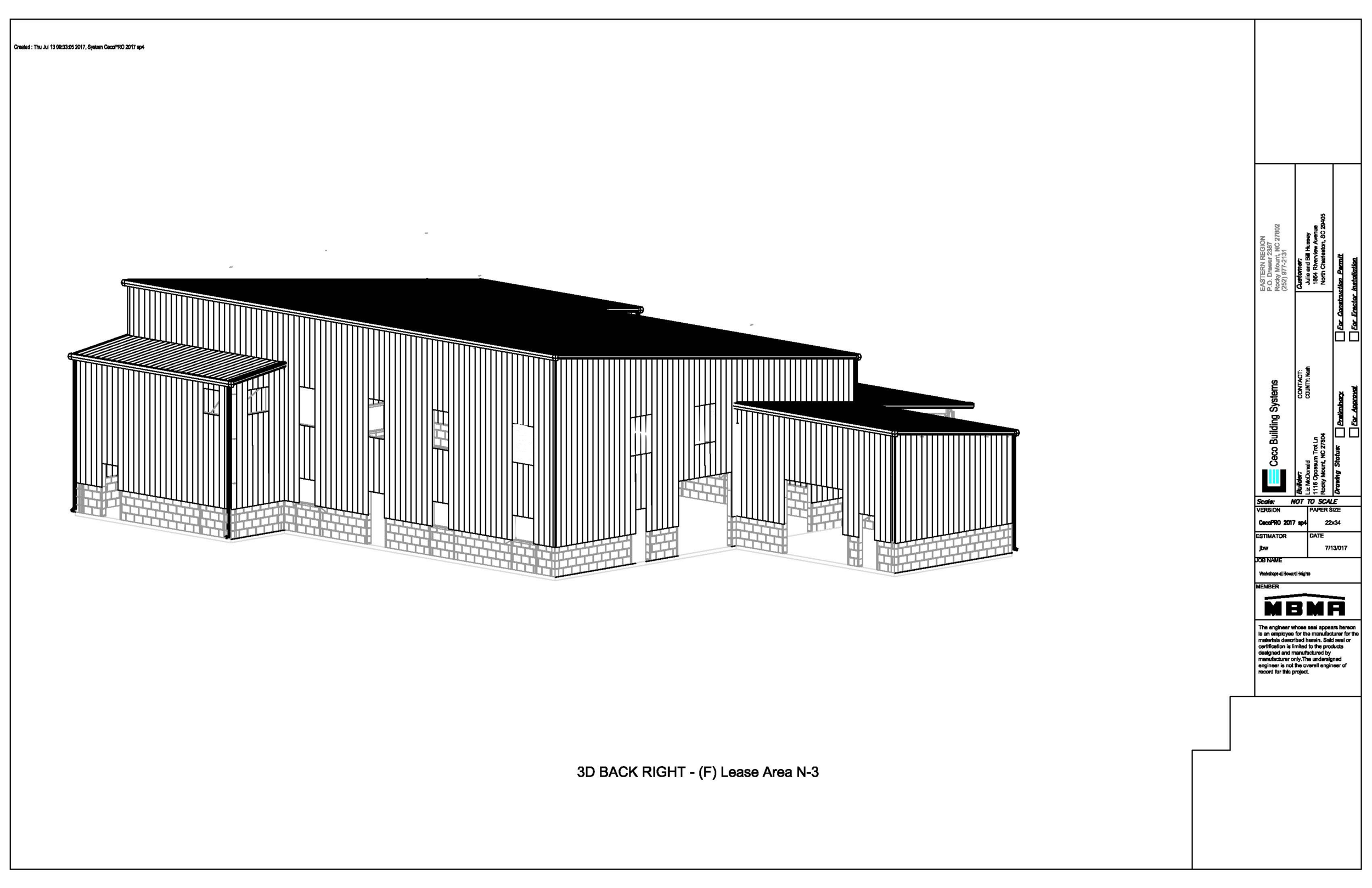
For the building, we started by working with Christopher Liberatos and Jenny Bevan of Bevan & Liberatos, who helped us envision how we could build an open floor plan with human proportions. Architect John Crouch of Oceana Design LLC used his experience with metal buildings and turned our ideas into a flexible space which can accomodate the workspace needs for Bill's Custom Woodworking and Carolina Cabinetry & Millwork along with a second floor space for craftspeople, artisans, and tinkerers. Matt Cline with Cline Engineering made certain our site plan was compliant with local regulations and designed to accomdate two buildings, parking, and storm water. Larry Kennerty with Kennerty Surveying helped us through all of the surveying necessary for rezoning, replatting, and siting the building.







Defining Craftsmanship
The Workshops at Howard Heights joins several other craftspeople in the area, such as Cooper Ironworks and Mastercraft Upholstery, as the southern entry point of North Charleston's "craftsmanship zone."
We embrace the concept of craftsmanship and the craftsman, but want to be clear about what this often overused, marketing term means to us in day to day life.
Craftsmanship as less about what is made and more about how it is made. Reaching across sectors, craftsmanship can be practiced by the individual maker of doors, upholstery, ironwork, bread, beer or spirits, cutting boards, clothing, high end lighting, mattresses, all of it up to the latest airplanes. Craftspeople are creators at heart, defined by their action rather than taglines or claims. With a willingness to get into the details, working, learning, and refining, craftsmanship is about being creative for creation's sake.
Craftsmanship stands on the hands and ideas of its craftspeople. While some say they can feel the energy of the humanity behind craftsmanship, everyone should able to see its evidence with its warranty and customization. Craftsmanship is always evolving. It is about the journey more than the destination: a process rather than a production. Craftspeople stand behind their work because their work is a representation of their effort and also because feedback improves the next iteration.
Craftsmanship loves the "one off." The customization of craftsmanship sets it apart from mass production. This does not mean that craftspeople cannot offer a line of products, but it does mean that craftsmen are more than happy to customize and tweak their work to meet a client's needs. Whether it is personalizing an item by tweaking it or working from a unique set of plans, customization is possible because craftsmanship is about serving and responding to its market versus requiring the marketplace to acquiesce.
Craftsmanship is not always more expensive. A true craftsman is happy to explain and justify their costs. Advertising campaigns love to drop the word "craftsmanship"into their product descriptions and then demand higher prices. There is no doubt that hand crafted items loose the economies of scale found in mass production, but do not assume that craftsmanship is always more expensive. Make the call, email, or visit and ask. A true craftsperson and company with pride of craftsmanship can explain how their prices are derived and demonstrate the costs of materials, labor, and overhead that factors into their prices. They may also be able to offer ways to lower costs by choosing different materials, increasing production, or scaling back details. When comparing prices, make certain you are comparing apples to apples and use the accessibility of your local craftsperson to ask them questions.
At its core, craftsmanship is about relationship: the maker and their craft, the craftsman and their client, and the craft and the world in which it functions. If you have a need that you cannot fill on your own, broaden your search to find a craftsperson who meets that need, take the time to get to know them, allow them to get to know you and your needs, and let the options begin.
We Are Shelter People
if your are a shelter person - someone who cares about what goes into the making of your house or the furnishings within it - we hope you will feel at home with us.
Why is it that in a world with so many options and possibilities we are the least connected with our basic needs?
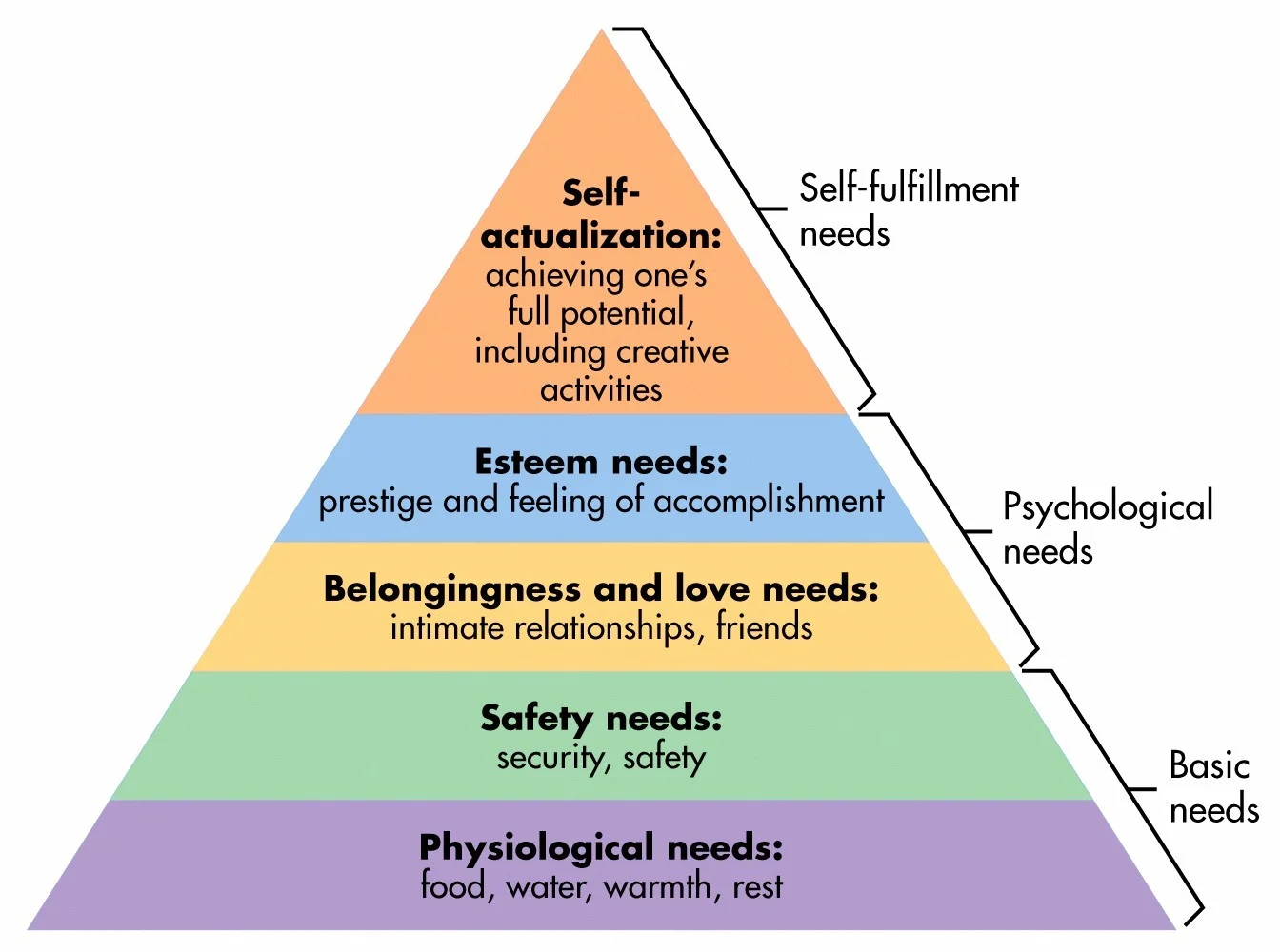
Growing up with Atlanta, my city embraced the values of American consumption. Consumption was our civic duty. Marketing 101 at UGA in the 80's taught budding sales and brand managers to create marketing plans which appealed the human needs within Maslow's Hierarchy - basic needs first and then onto to the higher need for self actualization.
The public's job was not to question but to consume with complete trust in corporate America to fill our basic needs cheaply and quickly so we can move on to filling our "higher needs" of self fulfillment, etc. What they failed to teach us, practice in action, or maybe even understand was that basic needs were not basic because they were easy to fill, but basic because the way in which they are filled is basic to our being.
- Food is not simply nutrients and calories. It is growing, harvesting, experimenting, trying, and sharing.
- Shelter is not square footage or even just a roof. It is protection, privacy, community, inspiration, and family.
- Clothing is not simply the filling of a closet with the most items for the cheapest price. It is individuality, exchange, style, design, crafting, and celebrating.
When we completely turn over the filling of these needs to the marketplace, we loose the lessons of self and the connections with others that come from participating in meeting our own needs - growing or cooking our food, designing or making our shelter or items in it, or mending or tweaking our clothing to fit properly.
A general survey of friends over casual conversation has shown me that while everyone appreciates our shared need for food, shelter, and clothing, each of us usually has one of these needs which is even more important to us.
For me it is shelter, a realization that I did not understand until Bill and I moved from a historic home with great proportions, views, and karma into a home which didn't have these things. Our new house had a roof, 4 walls, and the appropriate number of bedrooms, but it was not until we moved in and really looked that we realized its placement on the lot demonstrated a complete lack of understanding of shelter's need to connect us with our surroundings. I quickly realized that I cannot settle or feel at home until my shelter is working for and adapting to me, versus me working for and adapting to it.
I cannot imagine what I would have done without having Bill and his friends. These craftspeople are the people behind the production of shelter, they are the baker behind the bread, the seamstress or tailor behind the suit.
Our society is such that we need sales people, office professionals, large scale mass-manufacturers, and techies, but when we allow ourselves to become completely distanced from the hand making of things, we loose the connections between those basic needs and both our individual and our common humanity.
The Workshops at Howard Heights cannot be everything to everyone, but if your are a shelter person - someone who cares about what goes into the making of your house or the furnishings within it - we hope you will feel at home with us.